
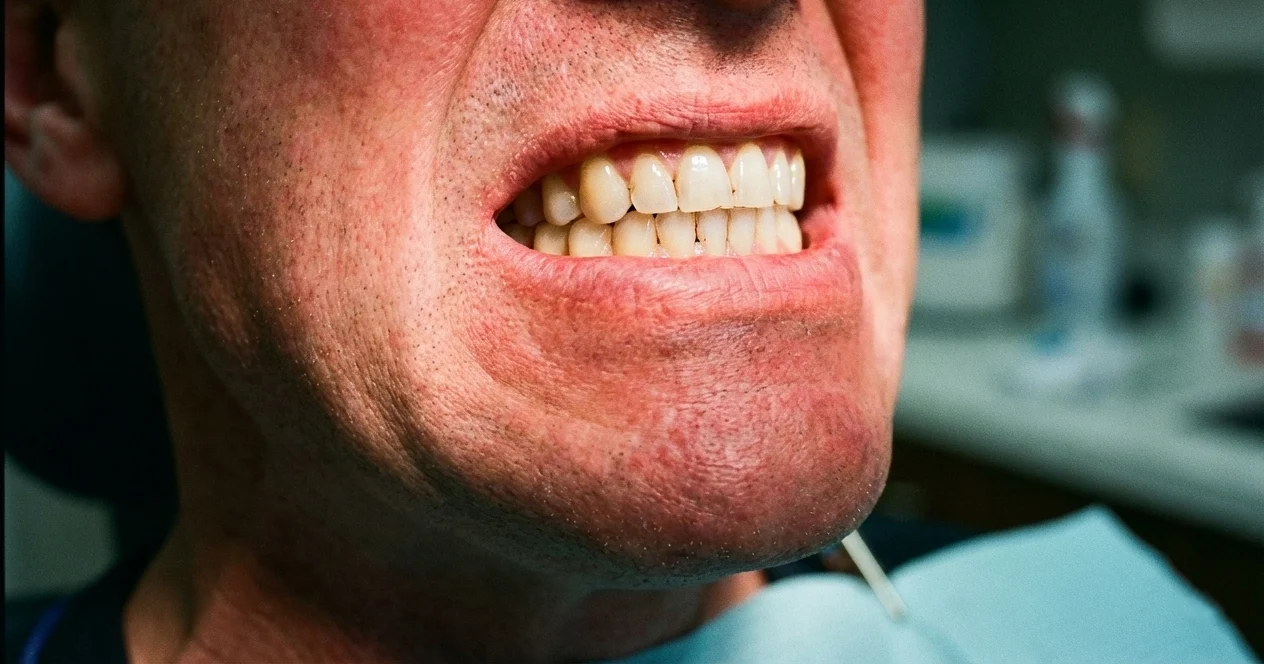
If when you wake up you feel a tired jaw, headaches, or you notice wear on your teeth, you may be experiencing bruxism.Bruxism is the involuntary habit of clenching or grinding your teeth,which can happen during the day or while you sleep. Although many people associate it only with stress, it’s actually a multifactorial condition that requires a professional diagnosis and comprehensive management.

How to identify bruxism?
The most common signs include:The most common signs include:
- Jaw, neck, or facial pain or stiffness.
- Frequent headaches, especially upon waking.
- Dental wear, fractures, or tooth sensitivity.
- Teeth that look shorter or flatter.
- Discomfort in the temporomandibular joint (TMJ).
In many cases, the patient isn’t aware of the habit until a dentist identifies the clinical signs during an evaluation.
Consequences of untreated bruxism
When bruxism isn’t controlled, it can lead to:
- Severe enamel wear.
- Fractures in natural teeth, crowns, or veneers.
- Chronic muscle pain.
- Bite issues.
- Aesthetic and functional compromise of the smile.
That’s why early diagnosis is key to avoiding more complex treatments in the future.
Types of bruxism
Awake bruxism: occurs during the day, often linked to concentration, tension, or poor postural habits.
Sleep bruxism: occurs while sleeping and usually involves stronger clenching forces, making it more damaging to teeth and muscles.
Both types can coexist and should be evaluated clinically.
Why does bruxism happen?
Bruxism doesn’t have a single cause. It can be related to:
- Stress and emotional tension.
- Bite issues.
- Missing teeth.
- Repetitive muscle habits.
- Neuromuscular factors.
That’s why treatment must be personalized—focused on protecting the teeth and reducing muscle overload..
Specialized diagnosis at OralStudio
At OralStudio, we perform a complete clinical assessment,including:
- Examination of teeth, gums, muscles, and joints.
- Analysis of tooth wear.
- Clinical photos and intraoral scanning.
- Functional bite evaluation.
Diagnosis is carried out by trained specialists—such as an oral rehabilitation specialist and a maxillofacial surgeon—who determine the severity of bruxism and the most appropriate treatment for each patient.
Bruxism treatment: relief, protection, and control
Bruxism treatment doesn’t promise a “permanent cure,” but rather aims to control the habit, relieve pain, and protect dental structure.
Custom bruxism splints
Bruxism splints are custom-made devices that:
- Protect teeth from wear.
- Reduce muscle overload.
- Help relax the jaw during rest.
They are a key tool to prevent further damage.
Botox therapy for bruxism
For moderate to severe cases, we offer therapeutic Botox,a safe and effective option that:
- Reduces muscle contraction strength.
- Decreases facial and jaw pain.
- Improves quality of life.
Botox doesn’t paralyze the jaw—it relaxes the muscles responsible for excessive clenching,making it a valuable ally in bruxism management.
Monitoring and follow-up
Treatment is always paired with periodic follow-ups to track progress, adjust the splint if needed, and ensure functional stability before any aesthetic or rehabilitative treatment.
Bruxism and dental aesthetics
When bruxism affects the appearance of your smile, we stabilize function first and then plan treatments such as:
This approach ensures natural-looking, long-lasting, and safe results.
Schedule your assessment appointment
If you have bruxism symptoms or want a professional evaluation, book your assessment appointment at OralStudio Medellín. We’ll guide you step by step to improve your well-being and the health of your smile.
📲 WhatsApp: +57 312 709 36 87


