
If you ever wondered Do whitening toothpastes work?, Here is the straightforward answer: do not work as teeth whitening. That is to say, do not change the actual tooth color nor do they clarify the tone from within, as does a teeth whitening, professional indicated by dentist.
So why do many people feel they “do help”? Because some pastes help to remove surface stains (those that stick from coffee, tea, red wine or tobacco) and leave teeth looking cleaner and brighter. This can improve the appearance, but is not a clinical bleaching.
What is “teeth whitening” for real (and why doesn't a toothpaste do it)?
Tooth whitening acts on the color of the tooth from the inside using specific whitening agents. The American Dental Association explains that bleaching treatments use agents such as hydrogen peroxide or carbamide peroxide, and can be done in the clinic or with products formulated by the dentist for home use.
On the other hand, “whitening” pastes are not designed for this type of internal action. do not change tooth color, because what they do is remove surface stains.
So, do whitening toothpastes work?
If you are looking for a actual bleaching, the answer is no.
If you are looking for reduce external stains and maintain a cleaner-looking smile, the answer is only partially, and with realistic expectations.
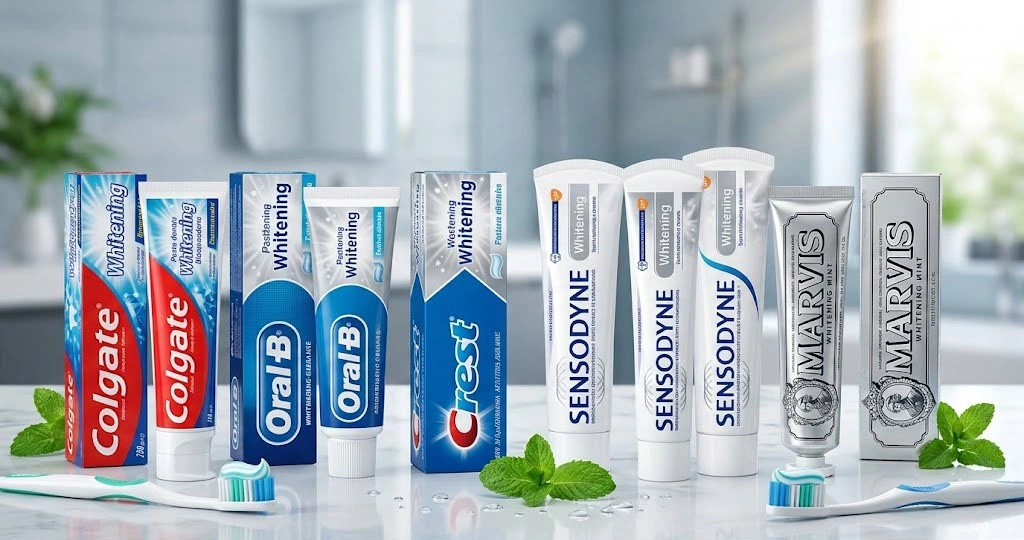
This is important so that the patient does not get frustrated or make hasty decisions: many times the tooth is not “dirty”, but its base color is what it is, or there are internal stains that a cream cannot modify.
What can whitening toothpastes do?
Reduce surface stains
Some “whitening” creams include mild abrasives that help to remove external pigments. The role of the mild abrasives in the paste, with the help of brushing, is to remove residues and stains on the surface.
To give more sensation of brightness
By removing external deposits and stains, the tooth may look “brighter”. In photos or cold lights, this is noticeable as a more polished smile, but not as an actual shade change.
Assist as maintenance support
When someone has already had a professional treatment (or keeps their hygiene very controlled), a suitable paste can support the maintenance of the appearance, as long as it is not aggressive to their enamel or restorations.
What they CANNOT achieve (and it's key to say it)
Do not lighten the internal color of the tooth
They do not change the “base shade”. If your tooth is naturally yellower or has internal stains, the paste will not change it.
Do not bleach restorations
And this is key: even professional whitening does not change the color of resins, crowns or veneers. Only natural teeth can be whitened, not tooth-colored restorations.
With a paste, this also applies, and can sometimes make the difference between natural tooth and restoration more noticeable.
The silent risk: abrasiveness and dental esthetics
In esthetic dentistry, it's not just the color that matters: it's the finish. Some whitening pastes have more abrasives and, over time, can dull esthetic surfaces.
In our blog we warn you directly: whitening toothpastes with particles can scratch or affect the finish of esthetic treatments, so we prefer non-abrasive options when there is a resin or ceramic smile design.
This does not mean “never use a whitening paste”, it means: make the right choice for you and avoids turning the target search into attrition.
When does it make sense to use them (without expecting miracles)?
It makes sense to consider a paste with a “whitening” approach if your objective is to control pigments due to habits such as coffee or wine and if you do not have esthetic restorations that can be dulled with abrasives. Even so, the result will be moderate: more visual cleanliness, not shade change.
If you are looking for a real color change, the right thing to do is to evaluate a clinical plan.
What do we do at OralStudio when someone comes in with this question?
When the question comes Do whitening toothpastes work?, The first thing to do is to identify the type of stain and the target.
We check if what you see is a superficial stain, internal color or even a contrast due to old restorations. With that we define whether it is appropriate to improve hygiene and habits, make a professional cleaning, plan a clinical whitening or integrate a more complete aesthetic treatment. In OralStudio, we work in aesthetic dentistry with diagnosis and planning to achieve natural results, not “trendy” results.
Frequently asked questions
Do “whitening” creams work for coffee or wine?
They may help to diminish external stains over time, but do not change the actual tooth color.
Can I use them if I have veneers or smile design?
Depends. Some formulas can be abrasive and affect the finish. That is why we recommend evaluating the type of paste according to your treatment.
Why are they “no good to me” if I use them every day?
Because if your problem is base color or internal stains, a paste is not going to change it.
Schedule your assessment with OralStudio
If you want to lighten your smile in a real and safe way, the smartest thing to do is to have us evaluate it with you. In the assessment we identify the type of stain, your level of sensitivity and if there are visible restorations, to tell you honestly what option is right for you: if hygiene and maintenance is enough, or if professional whitening or another cosmetic dentistry plan is indicated.
Call us or write us by WhatsApp.
Visit our website to explore all our services.


