
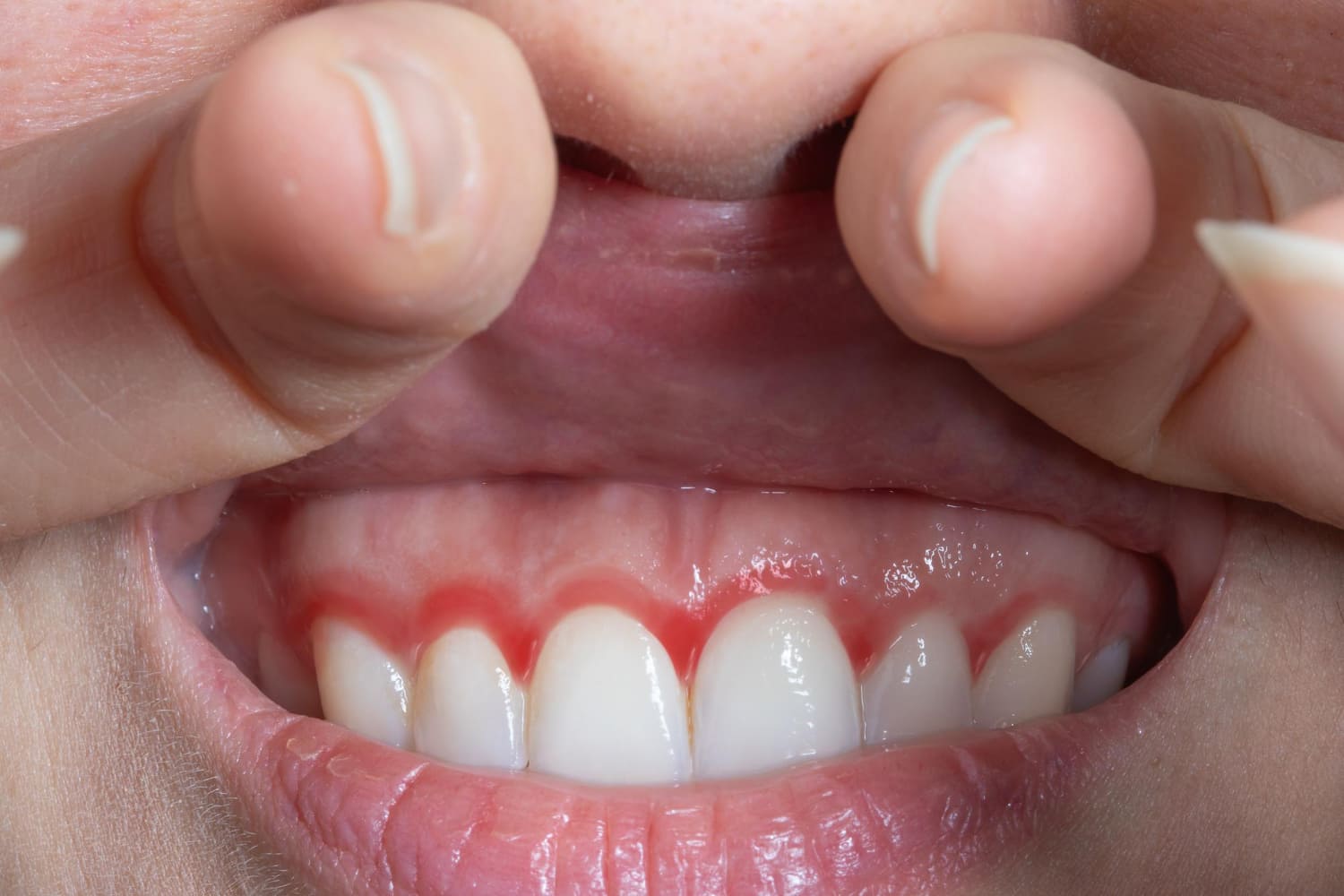
We solve the question “Why do the gums bleed?” and we tell you how in OralStudio, we treat the cause, not just the symptom.
If you notice blood when brushing or flossing lately, do not normalize it. Behind this sign may be anything from an aggressive hygiene technique to gingivitis or periodontitis in early stages.

Signs not to ignore
Spontaneous or brushing bleeding, persistent bad breath and sensitivity to hot/cold often indicate gingival inflammation. When bacterial plaque accumulates at the gum margin, the tissue becomes inflamed and bleeds easily. Ignoring it allows the inflammation to progress and compromise the supporting bone of the tooth, affecting esthetics and oral health.
Frequent factors
Brushing too hard with stiff bristles, forgetting to floss, hormonal changes (pregnancy), stress, smoking and certain medications (such as anticoagulants) increase the likelihood of bleeding. Poorly fitted restorations that retain plaque and thin gingival biotypes also play a role.
Alarm signals
If the gums bleed daily, there is visible retraction or dental mobility, this is a condition that requires immediate intervention. In these situations, schedule your priority evaluation appointment.
Why do gums bleed? Main causes
The most common origin is the gingivitis, A reversible inflammation caused by bacterial plaque. If left untreated, it can progress to periodontitis, In these cases, in addition to the gum, the bone is affected, generating periodontal pockets and risk of tooth loss. In both cases, the key is to intervene early.
Habits that make a difference
Brushing technique matters: gentle sweeping movements toward the gum, two minutes, three times a day, with soft bristles. Flossing (or interproximal brushes) breaks down the biofilm between teeth, where gingivitis is born. An alcohol-free rinse at night helps control the bacterial load.
Systemic impact
Periodontal health is related to overall wellness. Chronic gum inflammation has been associated with an increased risk of systemic complications, so treating your gums is treating your health.
Lesser-known causes that also lead to bleeding
In addition to plaque, there are situations that predispose to bleeding and often go unnoticed.
Chronic mouth breathing dries out the gums and makes them more fragile; bruxism generates constant microtraumas that inflame the tissues; aligners or orthodontics without rigorous hygiene favor plaque retention in margins and attachments; and abrupt changes in routine -diets high in simple sugars, frequent consumption of acidic or energy drinks- alter the pH and facilitate inflammation.
If you are wearing older restorations or crowns with overcontoured margins, biofilm is likely to accumulate there: it is worth checking these margins during the assessment.
Myths and facts about bleeding gums
A common misconception is that “if it bleeds, I'd better not pass the thread.”. It is the other way around: bleeding is a sign of inflammation and the thread is the key to resolve it, always with correct technique and without aggressive movements.
Another myth: “my gums bleed because my toothbrush is too hard and that's why I stop brushing”. Switch to soft bristles, reduce pressure and maintain frequency; discontinuing brushing aggravates the problem. Rinses alone are also believed to “cure” gums; they help as adjuvants, but do not replace professional cleaning or correct defective margins.
How we handle it at OralStudio
At OralStudio we understand that “healthy gums” is also aesthetics: a pink, firm and symmetrical contour frames your smile. Our protocol combines accurate diagnosis, periodontal therapy and personalized education so that the result lasts.
Diagnosis and periodontal examination
We evaluate plaque index, bleeding on probing and probing depth to detect pockets. With digital support (scanning/clinical images) we analyze biotype, frenular insertion and margins of restorations that are irritating the gum. This way we define whether we are talking about gingivitis or periodontitis and establish the plan.
Phased therapy
First, prophylaxis and deartration to remove supra and subgingival plaque and calculus. Then, root planing when periodontal pockets are present. We adjust contact points and margins of restorations that retain plaque. If the biotype suggests it, we propose gingival microprocedures to recover symmetry and facilitate hygiene.
Progress and follow-up signals
In the first two weeks, it is normal for the bleeding to clearly diminish and the gum to recover a pink and firm tone. If bleeding persists despite proper technique, we check for hidden causes: residual subgingival calculus, open contact points, maladapted crowns or habits such as nocturnal bruxism. Adjusting these details is part of maintenance; periodontal health is not an event, it is a guided process.
Plan at home: what keeps the result
The best treatment fails without habits. We provide you with a tailored hygiene routine: brushing, correct technique and pressure, dental floss or interproximals according to your anatomy and an alcohol-free rinse at night. We also define the frequency of check-ups (usually every 3-6 months) to maintain stable periodontal health.
Does it hurt to treat gums?
With local anesthesia and modern protocols, procedures are comfortable and recovery is quick. Bleeding relief and breath improvement are usually noticeable from the first few sessions.
Aesthetics that add up
Firm and symmetrical gums enhance the result of any aesthetic treatment (whitening, veneers, dental implants). Therefore, in the plans for smile design OralStudio's periodontal health is the first step, not an “extra”.
Quick questions: Why do gums bleed?
If you've come this far, looking for the literal answer to “Why do the gums bleed?”, The solution is summarized as follows: plaque accumulation and poor hygiene techniques (gingivitis), systemic factors or medications, and restorations that irritate the gums. The solution combines professional cleaning, habit adjustment and, if necessary, advanced periodontal therapies.
When to consult without waiting
Daily bleeding for more than a week, very red or purplish gums, pain when chewing, persistent bad breath or visible recession. If you are using anticoagulants or are pregnant, please advise at the evaluation to adapt your treatment.
What not to do
Do not suspend brushing for fear of “breaking” the gum. Brush gently, floss daily and schedule your professional cleaning: avoidance of hygiene, worsens inflammation.
Healthy gums, inspiring smile
Bleeding is not “normal”; it's a warning. With clear diagnosis, periodontal therapy and guided habits, you can reverse gingivitis and protect your smile in the long term. At OralStudio we accompany you with technology, aesthetic criteria and follow up so that your gums are firm, pink and free of bleeding.
Schedule your consultation here and take the first step today.


